
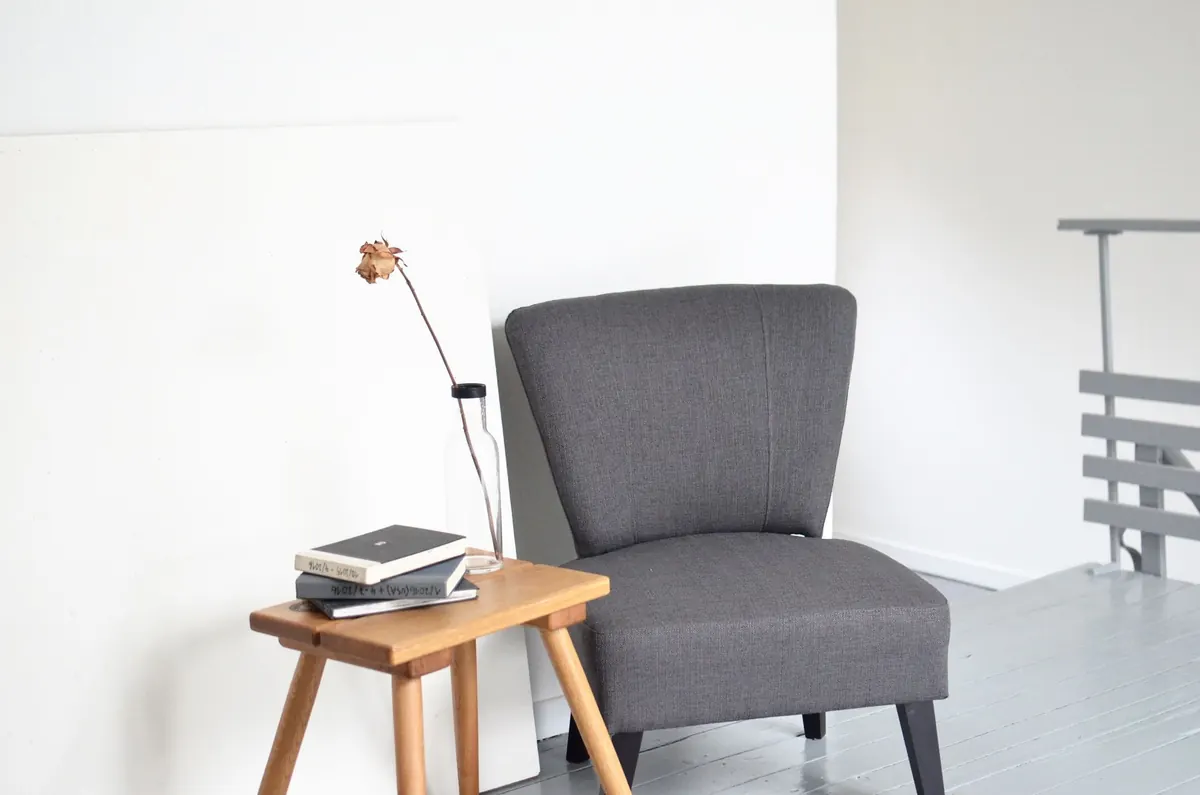

How to Set Up a Cosy Relaxation Corner at Home: A Checklist
Most homes already contain the raw material for a wind-down corner: an awkward alcove, a chair nobody sits in, the dead end of a landing. What they usually lack is a reason to be there. A relaxation corner works because it has one job, helping you slow down, and because it is deliberately unsuited to everything else, including scrolling.
You do not need a spare room or a big budget. You need light you can lower, something soft within reach, and a screen that lives somewhere else. Here is how to build it, room by room, without turning it into another project to manage.
Four questions before you move anything
Pick the spot first. The right place is usually the one you already drift towards when you are tired, not the one that looks best from the doorway. Run it past these four questions:
- Can you turn your back on the room? A corner, a nook beside a chimney breast, or a chair facing away from the telly all work better than a seat in the middle of the traffic.
- Is there a socket within reach? You will want a small lamp rather than the overhead light, and trailing an extension lead across a walkway is a trip hazard.
- Can you reach what you need without standing? A side table, a stool or even a sturdy box for a mug, a book and your glasses.
- Is it quiet at the time you will use it? If the washing machine or the front door is right there, the corner will lose its purpose.
If two or more answers are yes, you have your spot. If none are, look again: a bedroom corner, the space beside a wardrobe, or a wide landing often beats the obvious living room chair.
Lighting: build it in layers
Overhead lights are for cleaning and finding things. A wind-down corner needs light that sits low, stays warm and can be turned down without getting up.
The three-layer approach
- Base light. One small table lamp at hip or shoulder height, so the light falls on your lap and your hands rather than your face.
- Background glow. A second, dimmer source behind or beside you. A salt lamp, a string of warm fairy lights in a jar, or a cheap lamp with a low-wattage bulb all do the job.
- Task light. A clip-on reading light for pages, not screens, that you can switch off the moment you put the book down.
Look for warm white bulbs and put anything labelled "daylight" back on the shelf, at least for this corner. A dimmer switch or a plug-in dimmer is worth the few pounds if the lamp's own switch is awkward to reach. Candles only count if you will genuinely light them; otherwise they are just ornaments that gather dust.
Textures: seat, back, floor, lap
Comfort is mostly touch, and most people stop at the chair. Cover four surfaces instead and the whole corner changes character.
- Seat: something you sink into slightly but can still get out of, especially if you have sore hips or knees.
- Back: a firm cushion behind the lower back, or a rolled blanket for lumbar support.
- Floor: a rug or sheepskin underfoot, so you are not resting bare feet on cold boards in winter.
- Lap: a throw in wool, brushed cotton or chunky knit, kept folded on the arm of the chair so it is used rather than stored.
Stick to two or three colours, and favour matte, textured fabrics over anything shiny. A woven basket beside the chair for the throw and the book keeps the corner looking intentional rather than cluttered.
Scent: subtle, and easy to switch off
Scent is the quickest way to tell your body that the day is winding down, but only when it is faint. A reed diffuser in the corner, a few drops of oil in a ceramic warmer, a linen spray on the throw, or a candle lit for twenty minutes and then blown out will all do more than a heavy, room-filling plug-in.
Keep it gentle and ventilate the room. Fragrance can irritate airways, and essential oils affect pets and small children differently, so if anyone in the house has asthma, allergies or a respiratory condition, it is simplest to leave scent out or check with a pharmacist or GP first. The same goes for anything you plan to burn near where you sleep.
Make it screen-free, and make that easy
A rule against phones is really a test of willpower, and willpower is exactly what you have least of at nine in the evening. Change the setup instead: charge your phone in the kitchen or hallway overnight, and keep the corner out of sight of the telly. If you use your phone for music or a timer, buy a small speaker or a cheap kitchen timer so the device has no reason to come with you.
Leave something else within reach. A paperback, a notebook, a crossword, a sketchbook, a pair of knitting needles. Chapter-sized activities work best, because they have a natural end, unlike a feed.
The ten-minute reset
Corner comfort collapses quietly. A minute or two most evenings is enough: fold the throw, plump the cushion, trim the candle wick, empty the mug, wipe the table. If the corner stays tidy, you will use it; if it becomes a shelf for laundry, you will not.
Room-by-room variations
Bedroom
The easiest room to protect, because you can close the door. Keep the corner away from the foot of the bed where you pile clothes, and keep the light low enough that you never need to switch the main light back on after settling down. Skip scent here if you are sensitive to it overnight.
Living room
Aim for the chair that faces away from the screen, or use a screen or a tall plant to break the sightline. Headphones or a small speaker help if other people are watching something. Accept that this corner will be shared; put a small basket underneath the chair so the whole thing can be tidied in one movement before guests arrive.
Spare room, box room or landing
These spaces are often cold and dim, which makes them ideal. Add a rug, a lamp with a warm bulb, and a small heater if you will use it in winter. Even a chair and a shelf on a wide landing works, provided it is not a route people walk through to reach the bathroom.
Kitchen or dining corner
Good for morning quiet rather than evening wind-down. Choose a chair with a back rather than a stool, put a plant or a jar of utensils between you and the washing-up, and use the low pendant or a lamp on the worktop instead of the main lights.
What to do after the first week
Live with it for seven days before you buy anything else. Notice which evenings you actually sat there, what you reached for, and what annoyed you: a lamp too far away, a cushion too soft, a draught from a door. Fix those three things and leave the rest alone. Two or three quiet evenings a week is a genuine result.
The corner does not need to look like a photograph. It needs to be the one place in the house where nothing is asking anything of you. Build it around your own habits, keep it small, and it will hold up long after the novelty of a new cushion has worn off.
Photo: Skylar Kang / Pexels